Author: Lucien Canton

Mythmaking: Turning Fact Into Fiction

If you’ve been following my blog for any length of time, you’re probably aware that I have a penchant for history. I believe history has a lot to teach us and there are common themes that seem to repeat throughout history that have a bearing on current affairs. For example, Barbara Tuchman’s A Distant Mirror: The Calamitous 14th Century takes its title from her premise that the crises of the 14th century were reflected in the late 20th century. Similarly, Heather Cox Richardson’s Wounded Knee: Party Politics and the Road to an American Massacre describes political corruption in the late 19th century that is eerily similar to what we are observing with the current administration.

However, one of the most interesting issues for me has always been the truth behind myths. In many cases, we find that many myths do have a historical basis. The problem is that the facts behind a myth are often altered for a variety of reasons. We must ask ourselves what it is that makes myth so enduring and why do they persist, even when the truth is well known.

Some of variation between reality and myth is understandable and can be put down to misinformation that has changed in the retelling of an event. A myth is often the product of oral tradition, and it may be centuries before it is written down. Consider the classic works of Homer, The Iliad and The Odyssey. Homer is believed to have composed them as an oral recitation some 400 years after the events at Troy and were not written down until over 200 years later.

In other cases, events may be deliberately exaggerated to inspire. The Battle of Roncevaux Pass in 875 CE that resulted in the death of the legendary French knight Roland was an ambush of Charlemagne’s rearguard by Basque soldiers in retaliation for his burning of Pamplona. However, the myth changed the Basque to Saracens and had Roland dying heroically, creating one of the most influential myths of the Middle Ages.

Exaggeration can sometimes cross the line into deliberate disinformation, done for political purposes. Nero’s fabled fiddling while Rome burned in 64 CE was propaganda fomented by his political enemies. He was, in fact, heavily involved in coordinating relief efforts. During World War I, British newspapers were instrumental in spreading a false narrative that the Germans had a processing plant that boiled the corpses of dead soldiers to make oil, fat, and soap, dehumanizing the German army and turning public opinion against what was perceived as a brutal enemy.

In addition to misinformation and disinformation, mythmaking also relies on those that create the myths. We’ve mentioned Homer, who may or may not actually existed, but other poets have done their bit. The myth of Paul Revere’s famous “midnight ride” is famous because of the poem written by Henry Wadsworth Longfellow during the American Civil War to inspire patriotism. There were two other riders riding with him that night and a young girl of 16, Sybil Ludington, rode 40 miles, twice the distance of Revere, to bring the warning to the militia of a British attack on Danbury. Horatius defending the bridge at Rome against the Etruscans in 508 BCE might have been just a footnote in history if not for Thomas Babington Macaulay’s famous poem. And what would have become of the charge of the Light Brigade at Balaclava in 1854 if Alfred Lord Tennyson had not written his famous poem?

Our modern world has largely turned away from poetry, but the mythmakers still exist and are even more effective with advent of social media. X recently unveiled a new feature that reveals the location of users and the results demonstrate that mythmakers are still very much with us. According to news stories, a large percentage of high‑profile MAGA and related right‑wing influencers are based outside the U.S. and thought to be foreign actors using social media to try to reshape American society. Here are some examples gleaned from media sources:
• America First, 67,000 followers, Bangladesh.
• Americaman: 15,000 followers, Indonesia.
• American Patriot: 140,000 followers, Chile.
• Dark Maga: 15,000 followers, Thailand.
• IvankaNews: one million followers, Nigeria.
• MAGA & World: 3,000 followers, East Asia and the Pacific.
• Maga Nadine: 390,000 followers, Morocco.
• MAGA Scope: 51,000 followers, Nigeria, while MAGA Beacon is based in south Asia.
• MAGA: 1000 followers, Germany.
• MAGANationX: 400,000 followers, eastern Europe.

This brings us to the third component of mythmaking: the need for people to believe in the myth. Myths are accepted because people want to believe them. Myths frequently mirror beliefs already held by the recipient, what psychologists call confirmation bias, or speak to emotions that resonant strongly with the recipient. In addition, constant repetition of disinformation creates what psychologists call the illusory truth effect, where the constant repetition of a statement makes it more likely to be believed as true. This is why changing peoples’ minds with facts really has little success when a myth has taken hold. There will always be those who are not prepared to surrender closely held beliefs. For the rest, the only leverage we have is to go after the source: the misinformation or disinformation that is at the root of the myth.

In Technology We Trust

Guest Contribution by Michael Martinet, CEM

Go to a trade show, ANY trade show, and technology vendors of one sort or another, be they physical equipment or digital services, are the dominant presence. Nowhere is this more the case, than at an emergency management, disaster response, terrorism, or crisis management conference.
These cutting-edge technologies, especially including Artificial Intelligence, promise deliverance from whatever shortfalls bedevil the viewer’s respective discipline or program. If there’s a problem, there’s allegedly a technology fix on display, be it faster, more accurate, or more omnisciently able to analyze the respective data.

As is often the case, the individual technology not only promises to provide solutions to both the current perceived problem(s), and whatever unpleasant problems may possibly pop up in the indistinct near future.

Naturally, there is an often-substantial upcharge for these future features, and there is also the matter of the associated training costs, and the annual maintenance fees to maintain the usefulness and viability of the particular product or service in question. Thus, the actual life cycle costs can often be quite indeterminate; especially when the application of the technology turns out to be a spectacular flop.
Twenty or so years ago, in Southern California, during a very large wild fire, a notification technology, as advertised, sent an evacuation warning out to the community via local television, at THREE o’clock in the morning, a brain-dead mis-application of a possibly otherwise useful tool, insofar as almost all of the viewing public would have been asleep at that time.

On the flip side of the coin, the 2018 Hawaii false missile alert sent the Islands into a thoroughly confused status. Approximately one-quarter of the residents believed the alert, and nearly the same fraction did not believe the broadcast, with almost one-half not knowing either way.

An important consideration in the procurement and application of any technology are the inherent promises which the product or system promises to deliver, albeit usually under ideal conditions. Few technological solutions(?) will be able to deliver all that is promised.

Some years ago, I worked with a city of 140,000 population, within a much larger metropolitan area which also had a major petroleum refinery. Thanks to and because of the presence of the refinery, the city had no less than seven different types of notification protocols and technologies, due in part to the unpleasant fact that no single protocol or technology could guarantee 100% notification in the event of a problem at the refinery.

In one instance, when the warning sirens went off, the prevailing winds were blowing opposite from their normal flow, and the sound of the sirens were heard in a neighboring city, where the citizens had no idea what the siren’s warning meant, and naturally the city in which the sirens were located got less than the planned level of warning.

Technology is only a crude tool when mis-applied. It’s using a hammer to cut a board and using a saw to pound a nail.

The key element always is effective, proper, and understanding human control of the technology.
Looking back at the tragic floods that affected Texas this past summer, one of the frequently raised questions was regarding the lack of warning sirens. The sheriff was allegedly asleep, the emergency manager was supposedly off sick, and many of the locals were not concerned in spite of the broadcast warnings. What good would warning sirens have done to bring this picture into sharp actionable focus and actually save lives?

Just weeks earlier, in St. Louis, the responsible parties allegedly failed to use the existing warning siren system when a devastating tornado struck the City. The siren system was, by the way, very old, and apparently ill-maintained, so there’s no way to know if it would have worked, and if so, its warning was believed and acted upon by the citizens.

In the emergency management world, technology often presents the promise of timely and effective warning, often delivering neither. Sometimes indeed it is a failure of the technology itself, but quite often the failure resides in the hands and minds of the human behind the magic button.

Until humans wake up and take serious account of their responsibilities to their citizens will the ephemeral promise of technology begin to be even slightly realized. Signing off on the purchase order for a specific technology is not in and of itself a solution, it is the beginning of a very long-term and serious commitment.

Michael Martinet is Principal with The Martinet Group, LLC, specializing in teaching Disaster Finance and Cost Recovery programs. He is the author of Fighting With FEMA: A Practical Regulations Handbook.

Have We Become Too Dependent On The Federal Government?

Those who read my blog regularly know I am not a supporter of many of the emergency management policies espoused by the current Republican administration. Let me be clear from the start. I do not support politicizing disaster relief. Nor do I support withholding relief funds because of the optics of asking for additional allocations to the disaster relief fund or withdrawing funds allocated by Congress for mitigation projects. However, holding to the theory that a broken clock is right twice a day, I do think that the administration’s avowed intention to “return emergency response to the states” does have some merit and raises questions that might be worth discussing.
If we look at disaster declarations over time, we note that they have increased significantly. Based on FEMA data, the average number of Presidential disaster declarations in the 1960’s was 18.6. This rose to 57.1 in the early 2000’s. However, during the period 2020-2024, Presidential declarations averaged 164 per year. This can be partially attributed to the increased frequency and magnitude of disasters resulting from climate change. For example, prior to 1994 the most common disaster in the US was flooding. It has gradually shifted to fires, with recent Palisades Fire in California an example of how climate change has increased the risk of major fires.
However, not all disasters can be attributed to climate change, and the increased frequency of declarations raises the question of whether communities have come to see the federal government as the insurer of last resort. Many communities rely on self-insurance using emergency funds or simply retain the risk, betting that a disaster won’t occur and that the federal government will make them whole. There are also communities that cannot afford to fund the resources needed to adequately respond to disasters. Would limiting the availability of federal disaster relief encourage increased investment in emergency preparedness? It might, but it would require an increase in federal preparedness funding, something that the current administration seems determined to eliminate based on its clawback of mitigation funding and halting distribution of Emergency Management Preparedness Grant (EMPG) funds.
Federal funding under the EMPG program has contributed in an odd fashion to limits on preparedness in some communities. I’ve encountered a few communities where the emergency management budget is limited to the EMPG funds received and any matching requirements. In one jurisdiction, the emergency management program coordination was performed as an additional duty by a secretary because of funding limitations. (In this case, the government got a bargain – she was a real professional who took the job seriously.) Would cutting EMPG funds stimulate communities to better fund local emergency management programs as the current administration seems intent on doing, or would local programs simply cease to exist? Currently funds are distributed based on a fixed amount plus an amount determined by population. Could a reduction to the amount provided to larger communities that have the resources to fund an emergency program be used to provide increased funding to less affluent jurisdictions?
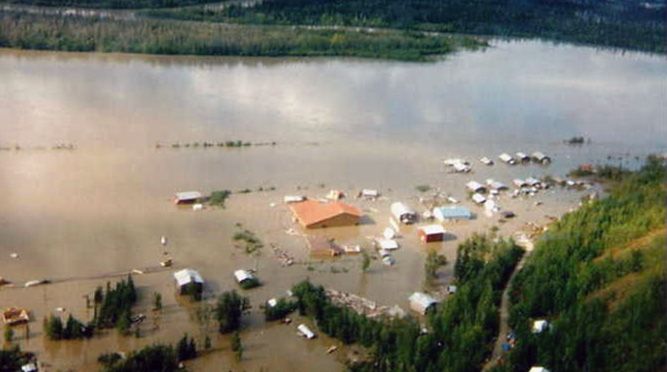
Emergency managers are well aware of the return on investment on funds spent on mitigation. If we are indeed seeking to encourage communities to be more resilient, stimulating investment in mitigation measures must play a critical role. Unfortunately, we’re seeing the opposite occurring. For example, the current administration froze a $20 million grant to Alaska earlier this year that would help mitigate future disasters such as the floods that affected Kipnuk, Kwigillingok, and other Alaskan communities. Funds were frozen so the Environmental Protection Agency could conduct a review of all grants that had to do with what they refer to as “climate justice.” This could well affect any grants that support mitigation projects focused on natural hazards.
I’ve previously written about the importance of FEMA beyond disaster relief (see my blog post What The Public Doesn’t Know About FEMA), so I won’t go into detail here. The issue here is that if we push increased responsibility on states without the support of an agency that coordinates doctrine and standards, we risk each state creating its own version of how disaster relief should be administered. Mechanisms that support mutual aid, such as the Emergency Management Assistance Compact (EMAC) or the Incident Command System, would lose their effectiveness, leaving states to “go it alone.”
To summarize, the concept of encouraging states to be more self-reliant is not in itself a bad thing. However, it is not a cost-saving measure nor a simplification of the administration of disaster relief. It would require an increase in pre-disaster funding and a redirection of much of that funding to states lacking the resources to create effective emergency management programs. It could mean the loss of a coordinated national system and its replacement with a patchwork of different programs. Not a good plan.

Returning EM Responsibilities to the States. How’s That Working For You?

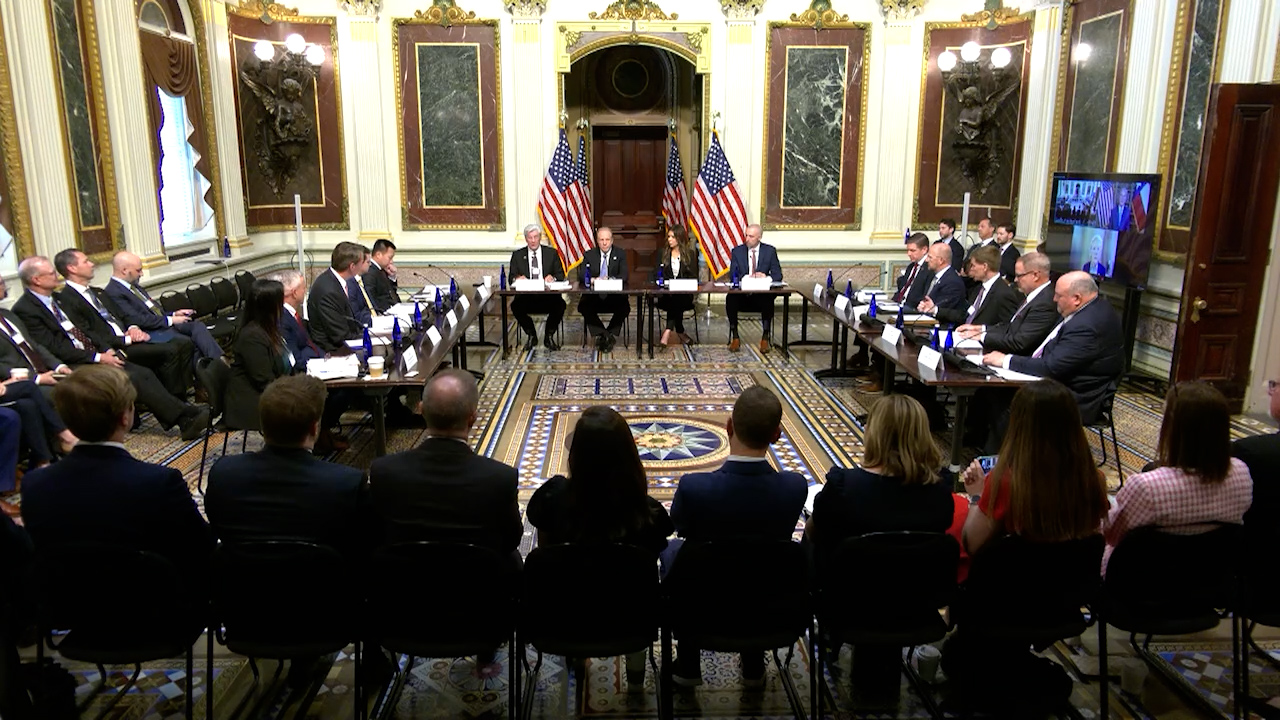
As we’re all aware, the current administration has constantly stated that they want to return responsibility for disaster relief back to the states. The mechanism to accomplish this is largely through either the elimination or significant restructuring of FEMA and transferring responsibility for administration of the Disaster Relief Fund to the Whitehouse. While we could debate the usefulness of a FEMA with no access to relief funds, the sad fact is that the Whitehouse is already calling the shots on relief funding.

In the past, the President made the decision on declaring a disaster quickly. During my time at FEMA Region IX, it was not unusual to come to work in the morning and be on a plane that evening. Now requests are not processed as received but are batch processed, delaying a response by weeks or even months. According to data compiled by Carnegie’s Disaster Dollar Database, disaster requests are being processed on roughly a bi-monthly basis. The data shows one gap of fifty-one days between July and September, despite a series of severe storms and flooding in the Midwest and Great Plains.

So, what’s the big deal? The problem is that without a declaration FEMA has no authority to provide the direct federal response needed in the immediate aftermath of a disaster. This means it can not deploy, establish a joint field office, or fund mission assignments to other federal agencies. This is important because, by definition, a disaster exceeds the resources available to state and local governments and direct federal response becomes critical in filling the gap. In addition, the federal government has specialized resources not normally available in most states.

The public perception is that FEMA is all about providing disaster relief funding, forgetting this direct response mission. However, programs such as Individual Assistance are also dependent on the timing of a Presidential Disaster Declaration. FEMA cannot take applications for assistance without the funding provided by a declaration, meaning that immediate assistance to displaced survivors suffers from substantial delays. This translates to no immediate assistance such as intermediate sheltering or home repair funds.

To make matters worse, while the Disaster Relief Fund is still solvent, it is expected to end the fiscal year with a barely positive balance according to the August report to Congress. Consequently, FEMA has been operating as if under an Immediate Needs Status by prioritizing immediate response needs over reimbursing jurisdictions for recovery activities. What this means is that jurisdictions in recovery mode are suffering substantial delays in reimbursements, with a resultant impact on municipal budgets. In some cases, the delayed funding can far exceed a jurisdictions annual budget.

The delays in deploying FEMA and reimbursing jurisdictions for recovery expenditures share a common thread: the desire to reduce the impact on the Disaster Relief Fund and prevent the need to request additional funding from Congress before the end of the fiscal year. This a clear case of prioritizing appearance over substance. Given the high likelihood that there will be a government shutdown, the situation is liable to get worse before it improves.

The problem is compounded by the refusal of the administration to recognize the importance of mitigation. On April 4, the President became the first President in 27 years to refuse a request for disaster mitigation funding in a Presidential Disaster Declaration for Virginia. In an April 21st memo, then FEMA Administrator Cameron Hamilton recommended that the President not automatically approve funding for hazard mitigation in disaster declarations and this has largely been the case since.

Also in April, FEMA ended the Building Resilient Infrastructure and Communities (BRIC), cancelled all BRIC applications from Fiscal Years 2020-2023, and froze $3.6 billion of unspent funds that had been approved for states. The BRIC program was the successor to the Pre-disaster Mitigation Program and was intended to assist communities in preparing for disasters before they occurred. Since funds were allocated and applications approved, many communities had already let contracts and begun capital projects, and the cancellation of federal funding will mean the cancellation of many of these initiatives.

This is the emergency management program we are being offered by the Republican Administration. Expect to handle a crisis that exceeds your resources without the deployment of federal resources to assist. Be prepared to fund relief for individuals and communities. Find your own funding to make your community safer. There’s talk of block grants that can be used by states, but will you be able to administer it? Given the administration’s demonstrated unwillingness to spend money already allocated for disaster relief, can you be assured it will even be available?

Yeah, how’s that working for you?

IAEM-USA Petition Update

In last month’s blog, Fighting Back, I asked you to consider signing a petition calling for the International Association of Emergency Managers to enforce its Code of Conduct. While the petition was not formally sent to IAEM, has responded to the concerns we raised in the petition. I recently received the following message regarding IAEM’s response.

Hello friends,

Thank you for adding your name to our petition asking that IAEM enforce its Professional Code of Ethics and Professional Conduct. Given IAEM’s response to the petition as outlined below, we have decided not to formally send the petition to the IAEM Board of Directors at this time. Below are the four requests included in our letter, and a summary of how IAEM has addressed our requests:

  1. Issue a clear statement clarifying the role of emergency managers in the United States and condemning the participation of emergency managers in detaining persons perceived to be immigrants. On September 4, 2025, IAEM released a written statement making the organization’s position clear that “emergency management exists to safeguard lives and property, protect communities, and foster resilience through thoughtful, evidence-based strategies”; that “[e]very decision we make should reflect our responsibility to uphold public trust”; and that “[a]bove all, emergency managers should do what they can to ensure emergency management remains a discipline rooted in compassion and service to all people as we work to build safer communities.” https://www.iaem.org/Groups/Councils-Global-Regions/IAEM-USA-Council/August-2025-President-Statement.
  2. Hold those who have violated the current Code of Conduct accountable by revoking their Certified Emergency Manager (CEM®) or Associate Emergency Manager (AEM®) credentials of those who participate in an official capacity in depriving members of their community of their rights.
    In a separate statement issued on September 3, 2025, to IAEM member and CEM Matt Green, the IAEM Presidential team stated that it has engaged with the Certification Commission leadership “to examine potential implications for applications that reference any work completed in the planning, construction, and operation of any detention facility for immigrants anywhere in the US and around the world,” and has “emphasized that the Commission must ensure its processes are prepared to evaluate applications that include experience within detention facilities.” The statement further indicates that the Presidential team has directed the Commission to “ensure we conduct a fair evaluation of emergency management work while confirming, and being absolutely certain, that no activity described in an application violates IAEM’s Code of Ethics and Professional Conduct. Additionally, they will continue to ensure that any experience or documentation submitted upholds the principles of emergency management.” https://drive.google.com/drive/folders/1c-e1cON6NrSi5ehn9O2vertw08YECy3c.
    IAEM further indicates in this statement that it has “coordinated with IAEM’s legal counsel and the Executive Director to ensure operational readiness to address any complaint that is received, supported by evidence, involving an IAEM member or AEM®/CEM® certification holder. Should any member suspect that another member, or a certificate holder, is violating the code or engaging in illegal activity, our system and processes stand ready to evaluate each complaint . . . .” https://drive.google.com/drive/folders/1c-e1cON6NrSi5ehn9O2vertw08YECy3c.
    The IAEM complaint process can be found at https://www.iaem.org/Complaint-Procedure.
  3. Update the Code of Ethics and Professional Conduct to make it clear that emergency managers who participate in an official capacity in depriving members of their community of their rights violate the Code and may be disciplined as a result
    For now, given IAEM’s statements as cited above, it appears the Code of Ethics and Professional Conduct addresses the issues presented by participation in depriving people perceived to be immigrants of their rights. See https://www.iaem.org/Portals/25/documents/Bylaws%20and%20Apps/IAEM-USA-APPs-Board-Approved.pdf. (p. 29-31.) For example, the Code provides that “IAEM-USA members have a primary duty of loyalty to the communities they serve and the environments they impact. Their work should uphold high ethical standards and respect for human dignity.” (p. 29.) In addition, the Code requires that members of IAEM act with respect for “the people we serve through compliance with the laws, regulations, and recognized standards is essential in maintaining integrity and trust in our professional and community relationships.”
    Similar requirements apply to those who have achieved IAEM certification as an AEM® or CEM®. See https://www.iaem.org/Portals/IAEMcertified/Documents/Resources/Professional-Ethics-and-Conduct-Guide.pdf.
  4. Keep members of the profession informed on a regular basis as to the steps IAEM-USA is taking to address this issue
    The statements issued by IAEM are a good first step in communicating IAEM’s position and its willingness to enforce the Code in the event of violations. We believe IAEM can do a better job of being transparent in their disciplinary actions while still maintaining privacy, but that is an issue for another day.

All that said, we encourage you to contact IAEM directly to express your thoughts, especially if you feel that the points in our letter were not fully addressed. We believe it is especially important that IAEM hear from anyone who made a decision to renew, rejoin, or to leave the organization based on these issues. We also believe it is particularly important for IAEM to hear from people who refrained from signing the petition out of fear. Anything we can collectively do to address that fear will only help the organization and the profession.

Sincerely,

Nathaniel Matthews-Trigg, MPH, CEM
Sarah Miller, PhD, CEM
Edie Schaffer, JD, CEM

Powered by WordPress