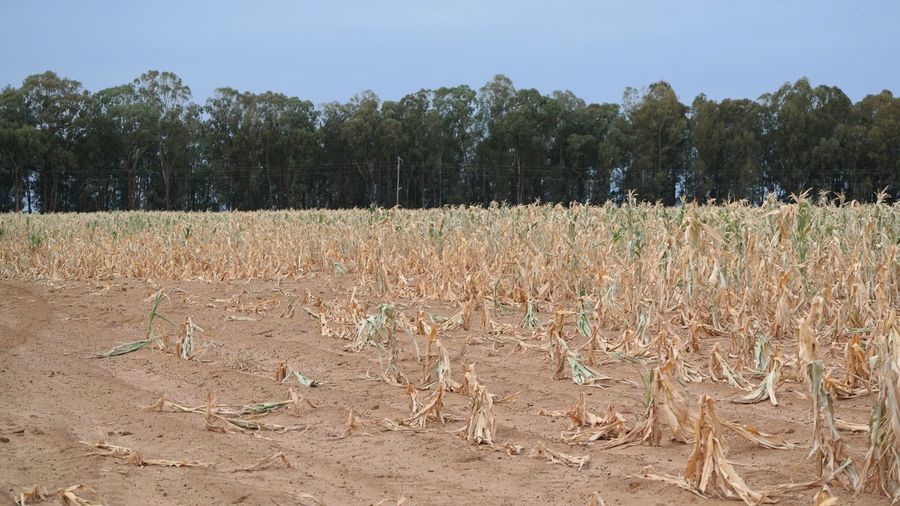
How Close Are We To Water Bankruptcy?
Some years ago, I was presenting a seminar to an audience of local emergency managers. Part of my presentation was a discussion on the tendency of the public to focus on the “flavour of the month” disaster rather than on true risk. One of the examples I used was the focus on Y2K that we had recently experienced and actual versus perceived risks. One of the issues I discussed was water. During the discussion, I used a throw away line, “Water wars are coming; you heard it hear first.” I didn’t realize how prescient that statement was to become.
The reason I made that statement may have been subconscious. I had recently been reading William Ashworth’s book Nor Any Drop to Drink that discussed a looming water crisis. As a Californian, I’d also had experience frequent droughts, the worst at the time being in 2007-2009. The conference at which I was speaking was in 2009, so both were fresh in my mind.
California has always had issues with water. The City of Los Angeles shares water from the Colorado River with seven states and Mexico. The San Francisco Bay Area draws water from Yosemite, 167 miles away. I became intimately acquainted with this system during my time with San Francisco Office of Emergency Services. To make the issue more complex, approximately 80% of the state’s developed water is used by agriculture and significant portions of water infrastructure are controlled by a small number of corporate landowners.
What brought all this to mind is a recent report by United Nations University’s Institute for Water, Environment, and Health titled Global Water Bankruptcy: Living Beyond Our Hydrological Means in the Post-Crisis Era.
To understand the significance of the report, it is necessary to understand how water systems work. The report uses the excellent analogy of a banking system:
- Checking account – this consists of renewable resources that are expended and replenished on an annual basis. A good example of this California’s reliance on annual snowfall in the Sierra Nevada mountains and Colorado River water.
- Savings account – this consist of resources that are not easily renewable, such as groundwater or glaciers. When I was a student in Phoenix, Arizona, the city was experiencing ground subsidence in areas owing to the over pumping of ground water from the aquifer.
- Bankruptcy – Systematically overdrawing and depleting accounts degrades capital. When it continues for too long, it passes the point at which capital can be replaced and the problem becomes irreversible.
With this in mind, we can understand why the report refers to water bankruptcy. In the opinion of the authors:
This report declares that the global human–water system as a whole has already entered the era of Global Water Bankruptcy (emphasis by authors). While not every basin or country is water-bankrupt, enough critical systems around the world have crossed these thresholds—and are interconnected through trade, migration, climate feedbacks, and geopolitical dependencies—that the global risk landscape is now fundamentally altered.
To understand why this is of concern, according to the National Aeronautics and Space Administration, only 3% of the earth’s water is freshwater. Of that, 2% is locked up in glaciers or groundwater, leaving 1% for human consumption. With glacier melt increasing due to climate change and the overuse of groundwater, we are rapidly depleting our savings account. According to the UN report, groundwater now supplies 50% of domestic use and over 40% of agricultural use, meaning that aquifers are being depleted faster than they can be replaced. About 70% of the world’s major aquifers exhibit long-term declining trends.
Climate change is also affecting our checking account as rivers begin to dry up and lakes shrink. Lake Mead, formed by the Hoover Dam, is the largest reservoir in the United States. Despite mandatory delivery restrictions in 2020 and 2021, in 2020 the lake reached its lowest level since the Hoover Dam was constructed in the 1930s.
Remember my comment on water wars? In 2010, one year after my conference, water-related conflicts around the world numbered 20. In 2024, the latest data available shows that there were over 400 such conflicts.
So, what does this mean to emergency managers? This is a strategic issue that requires long range planning. In addition to all the potential impacts of climate change, we need to consider the social impact on the populations we serve. We need to prepare for issues such as the potential for water and possibly food rationing and for the potential for civil disturbances. The whole point of the UN report is that this is not a future crisis; it is already here. I highly recommend you read the report. There’s a lot more information than I can share in a blog posting and the message is not encouraging.